Energy Storage-New Frontier of Asset Management

Charles Bamford • May 25, 2020

The future of Energy Storage is here, and it can be complicated

Earlier this month(May 2020), NY-BEST (NY-BEST.org) conducted a two segment introduction to how Energy Storage Resource will be operated in NY State.

Conducted by Peter Fuller, it was billed as an introduction to the subject, which seems very complex indeed.

However, the explanations and graphics are extremely clear. It warned that if your firm wished to operate battery storage in NY, you’d be well-advised to dig deep into the subject before major commitments.

That said, NY State has planned to add more renewables and storage in the near term, and how the grid will operate with such a high percentage of renewables is the topic of many discussions. It’s a good place to participate in the future of the grid.

Recruiting Activity

Our firm has worked on recruiting assignments in asset management that deal with batteries, and each ISO has present or soon-to-be-finalized rules. So, there should be increasing demands for related jobs.

These positions require an understanding of the real-time and day-ahead power markets. In addition, one has to have the analytical ability to keep up with the rule changes and how they might affect energy storage economics.

To us, these are great jobs for people who already have good experience in wholesale power markets, and who wish to transition to the world of renewables.

What's Your Elevator Speech About Your Background
By Charles Bamford November 5, 2020
Brevity is a scare commodity, and hiring authorities don't have much patience. If you were at a trade show and approached a potential hiring manager, could you come up with a phrase or two for that hiring situation? Perhaps, I'm really good at two things which would seem to be important for your firm and the projects it finances: (1) I really understand how to model the most complicated financial deals, and (2) I know which funding sources are available for projects like yours. This is actually a summary given to me by a candidate recently. Seldom get this much information with such clarity. See if you can do the same, even put it at the top of your resume. See what results it generates.
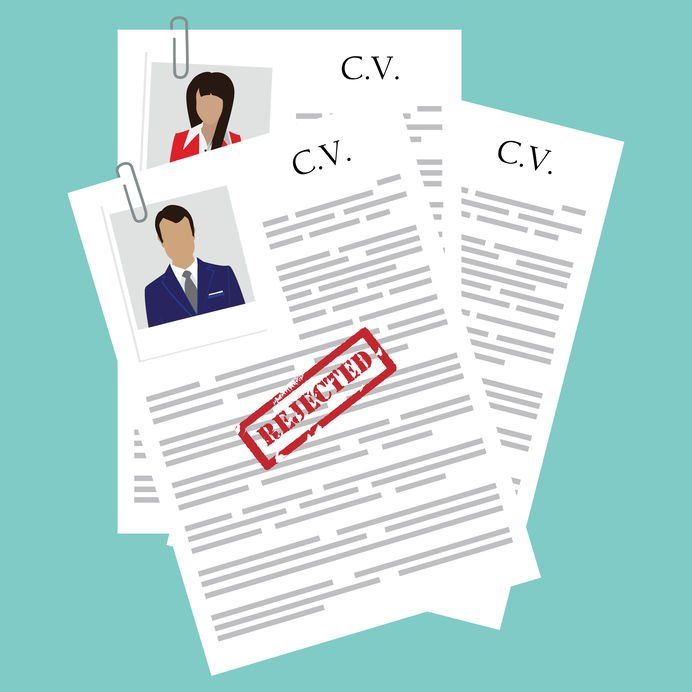
Great Composer Resume Rejected
By Charles Bamford November 3, 2020
Even Great Composers get their resumes rejected. Apply other places as a matter of course.
Who can help you find a job
By Charles Bamford August 9, 2020
There are two kinds of people who can help you find a new job.
How Covid-19 Is Affecting Jobs In Renewables
By Charles Bamford July 16, 2020
The solar and energy storage business continues to grow While many industries such as hospitality, travel and other consumer-oriented sectors are suffering from the pandemic When a project takes a year to put together and when it takes 18 months minimum to build, developers can’t stop. The other element is that many people have stopped looking for jobs. For reasons specific to them, they are not engaging with companies or recruiters. Their state of mind is “I’ll wait until this blows over, then look for a new job.” Competition for jobs is diminished.
Competition for Jobs
By Charles Bamford June 20, 2020
The Internet has made it easier to apply to job postings. One click and your resume is on the way. However, ANYONE can apply, not matter how badly qualified. So, an overworked human resources staffer has to to go through hundreds of resumes. Or a busy manager has to click through the pile. After the first 50, they start looking the same. Overly general job descriptions make it worse. Also, have you seen descriptions that spell out what the hiring authority doesn't want? The better way: focus on select companies/sectors. Decide who you want to work for. Determine what companies would benefit from your recent accomplishments. Use friends, alumni and recruiters to approach targeted execs with your ideas about how you can improve the firm's operations. Lots of work; infinitely more productive.
By Charles Bamford June 14, 2020
“XX(20+) years of experience….” Citing length of experience is an instant turnoff for several important groups of readers: 1) HR Managers, since they are frequently looking for more junior, less-expensive candidates; 2) Senior Managers, since they don’t want competition in the company for their jobs; 3) Recruiters, since they’re thinking “is all they have to offer is seniority?” And since so many people start their resume with this type of limp phrase, it’s BORING! Instead Tell the reader what you’ve accomplished in those years, with at least a few in last 3-5 years. So, maybe: John P. Smith • Increased sales of PPA’s to corporate clients by 30% year-over-year for 3 years running. • Reduced time to respond to RFP’s by 25% by mentoring younger staff during 2019. • Led sales team to 120% quota performance in last two years.
By Charles Bamford June 5, 2020
How to respond to job postings by Headhunters
By Charles Bamford June 1, 2020
In a recent conversation with a candidate, I told him that his resume story didn’t match what the job needed. He didn’t get it, so I explained. Over the past 3 jobs, it was clear that he was headed away from types of assignments that the client wanted someone to tackle. In this case, each new job was more focused on residential solar than the one before. Our job needed someone who was focused on utility-scale projects. A short career story on your LinkedIn profile is even more important than on your resume. Both places benefit immeasureably from a clear statement of purpose and direction. An example: Solar developer with focus on larger and larger solar projects, ranging from 50MW to now 300MW. Achievements: Solved problems involved in siting 50MW community solar project in NYISO; Worked with local utility and ISO to drop transmission interconnect upgrade costs by 40%. ·Shortened standard site design time by 20% through increased training for junior staff.
By Charles Bamford May 17, 2020
The top five reasons people leave jobs are In order of importance: Work Content Reporting Relationships Opportunities for Advancement Work Environment Income/Comp Plan Two of the top five are about who you work with. So, when looking at a job or a company, use LinkedIn to review the staff's background before interviewing or approaching the firm for a job. This helps you find things in common with the management (that you can use in an interview). Gives you an idea of whether other staff members will be the kind of people you'd want to share a plane trip with, or share a beer after work with. Life is too short to work in surroundings that don't motivate you.
By Charles Bamford May 10, 2020
This blog, the first of several, is not about biases relating to age, sex or racial makeup. It’s about the subtle and not-so-subtle things that help you identify company culture signals and how hiring managers might view you in an interview. Let’s start with something simple—some companies hire mainly from a limited number of universities. The longer this goes on, the more entrenched the habit becomes. So, the people who rise to become hiring managers probably came from those schools. This factor is one of the reasons to use alumni connections to get into a new employer. It leverages the alumni connection and more subtlely the similarities you might share with a hiring manager. You have, in effect, some to talk about that’s an ice-breaker. Moreover, alumni hiring managers are more apt to give you the benefit of the doubt on soft skills—how you work with others, would you be someone that they would feel comfortable with reporting to them. So, if you have an upcoming interview, get on LinkedIn and find out what the backgrounds are of a few key managers. Where did they go to school? What degrees do they hold? How technically driven are they? Also, see if you can find out who the recent hires are. Note: Interviewing is a two-way street. You're also evaluating whether you want to work in this firm. Is this a group you'd be comfortable with? Other comments on employer culture coming in the next blog.