
Job Networking-Why Would A Manager Want to Hear From You
Charles Bamford • May 1, 2026
Networking-Part Two. Some Managers Want To Connect

In the prior post, we suggested you connect with people at least one level above you. That's because they're in a better position to help you in your job quest than a peer.
But why would they want to connect with people BELOW them in the corporate pecking order?
1) their firm might be looking to fill a job, even if it's not posted.
2) they like helping people.
3) they liked the way you approached them--respectfully with a straight-forward message.
So, Go For It!
#energyjobs
#solarjobs
#energycareers

This blog, the first of several, is not about biases relating to age, sex or racial makeup. It’s about the subtle and not-so-subtle things that help you identify company culture signals and how hiring managers might view you in an interview. Let’s start with something simple—some companies hire mainly from a limited number of universities. The longer this goes on, the more entrenched the habit becomes. So, the people who rise to become hiring managers probably came from those schools. This factor is one of the reasons to use alumni connections to get into a new employer. It leverages the alumni connection and more subtlely the similarities you might share with a hiring manager. You have, in effect, some to talk about that’s an ice-breaker. Moreover, alumni hiring managers are more apt to give you the benefit of the doubt on soft skills—how you work with others, would you be someone that they would feel comfortable with reporting to them. So, if you have an upcoming interview, get on LinkedIn and find out what the backgrounds are of a few key managers. Where did they go to school? What degrees do they hold? How technically driven are they? Also, see if you can find out who the recent hires are. Note: Interviewing is a two-way street. You're also evaluating whether you want to work in this firm. Is this a group you'd be comfortable with? Other comments on employer culture coming in the next blog.

The top five reasons people leave jobs are In order of importance: Work Content Reporting Relationships Opportunities for Advancement Work Environment Income/Comp Plan Two of the top five are about who you work with. So, when looking at a job or a company, use LinkedIn to review the staff's background before interviewing or approaching the firm for a job. This helps you find things in common with the management (that you can use in an interview). Gives you an idea of whether other staff members will be the kind of people you'd want to share a plane trip with, or share a beer after work with. Life is too short to work in surroundings that don't motivate you.
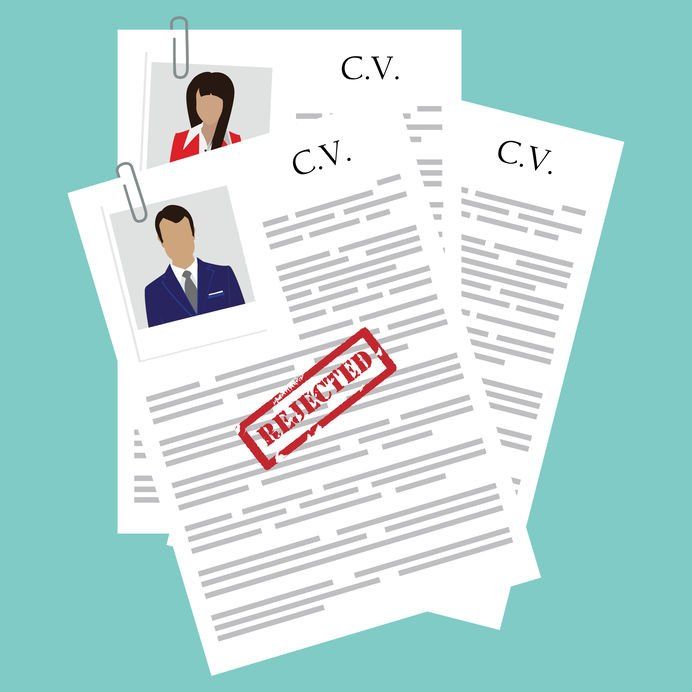
Even Great Composers get their resumes rejected. Apply other places as a matter of course.

When you've entered the hiring cycle at a company, find out the process--upfront. This process varies tremendously from company to company and individual hiring manager to hiring manager. Knowing what this process is and how to navigate is what recruiters deal with every day. If you’re not working with a recruiter, you can figure it out too (with some effort) and improve your chances of getting more and better interviews. Here are the steps: 1) understand the company and the people it already has on board. 2) understand something about the hiring manager. 3) see who the hiring manager has hired before. 4) is there now really a job to be filled and what’s the current definition? 5) what’s the best way to introduce yourself to the hiring authority? 6) what information should you provide about yourself (maybe an introductory letter, maybe a tailored resume) 7 STEPS TO GETTING BETTER JOB INTERVIEWS 1) Understand the company and its people. What is the firm’s business model? If a firm’s business model is to respond to Requests For Proposal put out by a utility, it’s more likely to need technical sales than true new business, door-knocking sales reps. If it’s heavily focused on demonstrating its engineering prowess in project design, it will want people with engineering degrees and hard-core engineering experience. 2) What Is The Background of The Hiring Manager (or likely Hiring Manager)? Does she or he have an engineering background? What schools did they go to? Where did they work before? 3) What kind of people has he/she hired before? LinkedIn is a great resource for seeing where present managers and staff have come from. Managers do hire in their own image. If the job is a replacement job and the past incumbent had been there a few years(they kept her around), then it’s likely that the next hire will look like her. Some firms like to hire from select firms like GE, Siemens, …. See if the description for the job in question matches the existing staff’s background. 4) What’s the current job description? If the process involves replacing an existing person or someone who’s just left, the chances are good that the job definition is the same. If it’s a newly created job, the chances are good that “the job definition is a moving target.” As managers seek to fill a newly created position, they learn from the interviewing process what might work, what might not. They also learn what types of candidates are in the marketplace. Sometimes, even Human Resources staff has a hard time keeping up with the manager’s current thinking. So, find out the latest. 5) What’s the best way to introduce yourself to the hiring authority? Company size has a lot to do with this. Larger firms try to have all initial contacts come through the Human Resources department. Or, if the contact is made initially with the hiring manager, that manager is generally asked to send the resume to Human Resources so that there is a record of the applicant. Whenever possible, we recommend direct contact with the hiring manager, even if he/she sends the resume to HR. If you’re using a recruiter to approach the firm, he/she will know the best method of introduction. The worst way to introduce yourself to a firm is to send your resume to the corporate website. You seldom hear back, and no one takes ownership of your application. If you don’t approach the hiring manager, try to deal with a specific person in Human Resources. Depending on HR’s staffing levels, you can get a very crisp, professional response. In talking to the hiring manager, you might even ask if he or she is the supervising manager. You could be talking to the wrong person. 6)What information do you provide about yourself in the initial approach? The right answer is “as little as possible,” particularly if you don’t have a great deal of information about the process and status of the job that’s open. Moreover, what if you don’t know if there’s a specific job available but you suspect that there might be a position available. Ideally, you do what sales training might suggest–“An initial benefit statement” that is relevant to the hiring manager. Even a weak initial benefit statement is better that saying bluntly that you a wonderful potential employee. An example might be: ” I understand that your firm is seeking new accounts in the commercial & industrial account sector. If this is the case, I have a strong track record of new business generation and would like to talk to someone about what your firm’s sales approach is. It might benefit from my experience.” (Discussing how best to craft an initial benefit statement that’s likely to be relevant is beyond the scope of this article. Since the Xerox Personal Selling Skills course first introduced this term, there have been many improvements. Check the concept out on the internet.) 7) When do you send a resume? At some point in the discussion, you will be asked to send a resume. Some important things to consider: 1) is it just an excuse to get you off the phone? Is there a really a job, is the hiring manager really interested in hiring someone soon, how many people are already being interviewed? 2) before you send a resume, you have to get a) more information and b) a commitment from him or her to review your background and talk with you about it in the future. If you get no commitment, you don’t send anything. Or, you might send a follow-up note citing your general background (with accomplishments relevant to the possible job.) Then you go back and tackle the hiring manager at another time. What about your LinkedIn profile? Should you refer to it? If it’s very general, has no achievements, has no particular relevance to the job in question—-it’s better not to refer to it. Companies can use it to eliminate you from consideration. How one deals with LinkedIn profiles is another topic too long to discuss here.

Setting aside time to do real business/career networking It’s never too late, nor too early. As a professional recruiter, I hang on to relevant contact information forever and do my best to keep in touch in some personal way. I encourage college students to start good habits in making contacts DIRECTLY with people that they can help or be helped by. I say the same to senior execs. That should be every one’s goal. Too many people depend on the internet, Facebook or Linkedin to do the heavy lifting associated with keeping in touch. As the size of these networks grow, they get more crowded and impersonal. Connecting via a social network is better than nothing, but not the equivalent of a direct email, or better yet---A PHONE CALL. Test your network by trying to call people and catch up. If they don’t return your call within a week or so or send a text or email, that tells you something. They either don’t remember you, or don’t consider you a valuable contact.

The Internet has made it easier to apply to job postings. One click and your resume is on the way. However, ANYONE can apply, not matter how badly qualified. So, an overworked human resources staffer has to to go through hundreds of resumes. Or a busy manager has to click through the pile. After the first 50, they start looking the same. Overly general job descriptions make it worse. Also, have you seen descriptions that spell out what the hiring authority doesn't want? The better way: focus on select companies/sectors. Decide who you want to work for. Determine what companies would benefit from your recent accomplishments. Use friends, alumni and recruiters to approach targeted execs with your ideas about how you can improve the firm's operations. Lots of work; infinitely more productive.

Deciding Who Can Help You In Your Job Search There are 10 steps in Rockwood's approach to finding a new job. Networking generally comes later but you can start now if you KNOW What Type Of Job You Want. Any good sales person would tell you that you must know who will influence the sale of a new product at a client company. A job search is no different. You need to know who can be a good influence in getting you a job at a specfic company or in a sector of the business. For example, the California Utility-Scale solar might be a target of yours. So, who can help you? They need to be at least one level above your present role. In effect, they would be the kind of person you might report to. Or, they could be a peer of that person. So, look on LinkedIn for managers in the utility-scale solar business. While managers are harder to network with, they give more realistic feedback, might recommend you to another manager in the same or different company. Friends who are not managers are NOT terribly valuable. They don't bring the same critical eye to a resume that a manager will. Also, going too high in the corporate structure isn't ideal. For example, many job seekers write the president of firms. Most of those resumes are referred immediately to Human Resources. Finally, don't forget Headhunters. They are approachable, particularly if you're realistic about your next job and have a good work record.

“XX(20+) years of experience….” Citing length of experience is an instant turnoff for several important groups of readers: 1) HR Managers, since they are frequently looking for more junior, less-expensive candidates; 2) Senior Managers, since they don’t want competition in the company for their jobs; 3) Recruiters, since they’re thinking “is all they have to offer is seniority?” And since so many people start their resume with this type of limp phrase, it’s BORING! Instead Tell the reader what you’ve accomplished in those years, with at least a few in last 3-5 years. So, maybe: John P. Smith • Increased sales of PPA’s to corporate clients by 30% year-over-year for 3 years running. • Reduced time to respond to RFP’s by 25% by mentoring younger staff during 2019. • Led sales team to 120% quota performance in last two years.

It is simply “Why I as a candidate am valuable to your firm.” Hiring Managers are busy people. So are Human Resources staffers. If you can’t capture their attention to your cover letter and resume, then you’ve lost your chance. Don’t depend on the cover letter and resume to stay together, either—as your resume gets forwarded in internal emails. Good resumes show achievements that relate to the target employers business. For example: “Shortened the time to construct 10 MW solar installations by 10%, thereby saving a total of $5 MM/year for my firm.” “Increased revenue to corporate energy buyers by $5MM/year during first 2 years of my most recent position as senior sales executive.” “Reduced early design time for solar sites by 20% though the use of automated Excel templates used by myself and our engineering team.” Be Direct. Dear Mr XX. Based on my review of your company's operations it appears that I can bring value to your sales force through my focused sales skills and experience—which are detailed in the attached resume. But what if you don’t know what’s of interest about my background. A. Don’t bother sending a resume. B. Find out. It will help you build a better resume and interview better.

